Exploring the realm of Wealth and asset management, this introduction captivates readers with a detailed yet engaging narrative, shedding light on the intricacies of financial planning and investment strategies.
It dives into the key differences between wealth management and asset management, providing a comprehensive overview of their roles in shaping a successful financial future.
Wealth and Asset Management

Wealth and asset management are crucial components of financial planning that help individuals and organizations grow and protect their financial resources.
Wealth Management
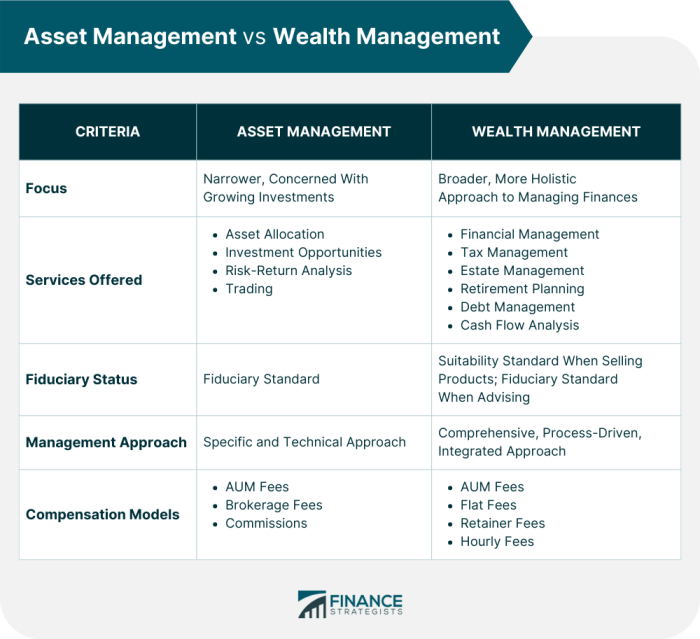
Wealth management involves the comprehensive management of an individual’s financial resources to achieve their financial goals and secure their financial future. It includes services such as investment management, financial planning, estate planning, and tax planning. Wealth managers work closely with clients to understand their financial objectives and create tailored strategies to help them reach their goals.
Asset Management
Asset management focuses on managing a client’s investment portfolio to maximize returns while minimizing risks. It involves making informed decisions about buying, selling, and holding various assets such as stocks, bonds, real estate, and other investment products. Asset managers use their expertise to help clients build a diversified portfolio that aligns with their financial goals and risk tolerance.
Comparison and Contrast
- Wealth Management: Primarily focuses on the overall financial situation and long-term goals of the individual or organization. It involves a holistic approach to financial planning and includes services beyond investment management.
- Asset Management: Concentrates on managing the investment portfolio and optimizing returns on investments. It involves more tactical decision-making related to buying, selling, and holding specific assets.
Asset Management
Asset management involves managing a client’s investments and assets to achieve specific financial goals. This includes creating and implementing investment strategies, monitoring performance, and making adjustments as needed to maximize returns.
Types of Assets Managed in Asset Management
- Equities: Stocks representing ownership in a company.
- Bonds: Debt securities issued by governments or corporations.
- Real Estate: Properties and land holdings for investment purposes.
- Commodities: Physical goods like gold, oil, and agricultural products.
Asset Management Tools and Software
Asset managers utilize various tools and software to streamline processes and make informed decisions. Some common examples include:
- Wealth Management Platforms: Software that helps manage client portfolios, track performance, and provide financial planning tools.
- Portfolio Management Systems: Systems that assist in portfolio construction, rebalancing, and performance analysis.
- Risk Management Tools: Software that assesses and mitigates investment risks to protect client assets.
- Financial Modeling Software: Tools used for forecasting, valuation, and scenario analysis to optimize investment strategies.
Asset Allocation
Asset allocation is a crucial strategy in portfolio management that involves dividing investments among different asset classes to achieve a balance between risk and return.
Key Principles of Asset Allocation
- Asset allocation should be based on individual financial goals, risk tolerance, and time horizon.
- Diversification across various asset classes can help reduce risk and improve overall portfolio performance.
- Regular monitoring and periodic rebalancing of the portfolio are essential to maintain the desired asset allocation mix.
Benefits of Diversification in Asset Allocation Strategies
- Diversification helps spread risk across different asset classes, reducing the impact of volatility in any single investment.
- By investing in a mix of assets with low correlation, diversification can enhance returns while minimizing overall portfolio risk.
- During market fluctuations, a diversified portfolio is better positioned to weather the storm and potentially deliver more consistent returns over the long term.
In conclusion, Wealth and asset management play vital roles in securing and growing one’s financial assets. By understanding the concepts of asset management, asset allocation, and the importance of diversification, individuals can make informed decisions to achieve long-term financial stability.
Top FAQs
What is the primary focus of wealth management?
Wealth management primarily focuses on managing an individual’s financial assets and investments to grow their wealth over time.
How does asset allocation contribute to portfolio management?
Asset allocation plays a crucial role in portfolio management by spreading investments across different asset classes to reduce risk and optimize returns.
What are some common asset management tools used in the industry?
Some common asset management tools include portfolio management software, investment tracking platforms, and financial analysis tools.


