As Sustainable asset management takes center stage, this opening passage beckons readers with engaging insights into the world of sustainable asset management, shedding light on its significance and impact on both investors and the environment.
Exploring the principles, strategies, and integration of ESG factors, this topic delves into the realm of sustainable finance with a focus on long-term value creation and responsible investing practices.
Sustainable Asset Management

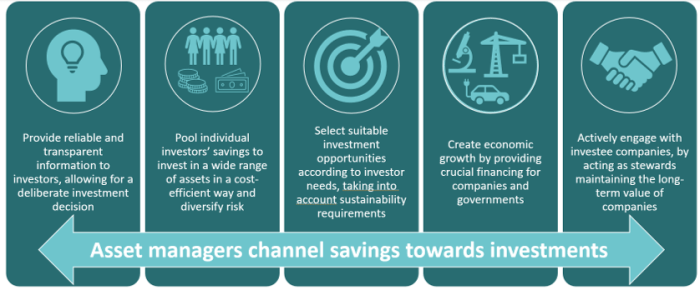
Sustainable asset management involves the integration of environmental, social, and governance (ESG) factors into investment decisions and portfolio management strategies. It aims to generate long-term financial returns while also contributing to positive social and environmental outcomes.
Importance of Integrating Sustainability
Integrating sustainability into asset management practices is crucial for several reasons. Firstly, it helps investors identify and manage risks related to ESG issues that could impact the financial performance of their investments. By considering these factors, investors can make more informed decisions that align with their values and long-term objectives.
- Enhanced risk management: By incorporating ESG considerations, investors can better assess and mitigate risks that traditional financial analysis may overlook. This can lead to more resilient portfolios in the face of environmental, social, and governance challenges.
- Long-term value creation: Sustainable asset management focuses on generating sustainable financial returns over the long term by investing in companies that prioritize ESG practices. This approach can lead to more stable and predictable investment outcomes.
- Positive impact: By supporting companies with strong ESG performance, investors can contribute to positive social and environmental outcomes, such as reducing carbon emissions, promoting diversity and inclusion, and fostering responsible corporate behavior.
Benefits of Sustainable Asset Management
Sustainable asset management offers a range of benefits for both investors and the environment. These include:
- Improved financial performance: Research has shown that companies with strong ESG practices tend to outperform their peers over the long term. By investing in these companies, sustainable asset management can potentially enhance financial returns for investors.
- Reduced risk exposure: By considering ESG factors in investment decisions, investors can reduce their exposure to risks related to climate change, regulatory issues, and reputational damage. This proactive approach can help safeguard investment portfolios against unforeseen challenges.
- Environmental stewardship: Sustainable asset management promotes responsible investing practices that support environmental conservation and sustainability. By directing capital towards environmentally friendly projects and initiatives, investors can play a role in addressing pressing environmental issues.
Principles of Sustainable Asset Management
Sustainable Asset Management is guided by key principles that focus on integrating environmental, social, and governance (ESG) factors into investment decisions to drive long-term value creation while considering the impact on society and the environment.
Key Principles:
- ESG Integration: Incorporating environmental, social, and governance factors into the investment analysis and decision-making process to identify risks and opportunities.
- Stakeholder Engagement: Engaging with various stakeholders, including employees, communities, and regulators, to understand their perspectives and concerns.
- Impact Measurement: Assessing and measuring the impact of investments on sustainability goals, such as carbon footprint reduction or social welfare improvement.
- Risk Management: Managing risks related to ESG factors to protect the long-term value of investments and mitigate potential financial losses.
Examples of Sustainable Investment Strategies:
Sustainable asset management involves various investment strategies that align with ESG principles, such as:
- Impact Investing: Investing in companies or projects that aim to generate positive social or environmental impact alongside financial returns.
- ESG Screening: Screening out companies involved in controversial industries or practices that do not meet specific ESG criteria.
- Thematic Investing: Investing in themes or sectors that address sustainability challenges, such as renewable energy or clean technology.
Comparison with Traditional Asset Management Approaches:
Traditional asset management primarily focuses on financial returns without considering ESG factors, leading to potential risks related to sustainability issues. In contrast, sustainable asset management integrates ESG considerations to drive long-term value creation, reduce risks, and align investments with sustainable development goals.
ESG Integration in Asset Management
In asset management, ESG refers to Environmental, Social, and Governance factors that are considered in investment decisions to evaluate the sustainability and ethical impact of investments. These factors play a crucial role in determining the long-term performance and risk profile of investments.
Incorporating ESG Criteria into Investment Decisions
ESG criteria are incorporated into investment decisions through a variety of methods, including:
- Screening: Excluding or including companies based on their ESG performance.
- Integration: Integrating ESG factors into traditional financial analysis to better assess risks and opportunities.
- Engagement: Engaging with companies to encourage positive ESG practices and influence change.
- Impact Investing: Investing in companies or projects with the intention of generating measurable social or environmental impact alongside financial returns.
Impact of ESG Integration on Investment Performance and Risk Management
The integration of ESG factors in asset management has shown to have a positive impact on investment performance and risk management. Companies with strong ESG practices tend to perform better in the long run, as they are better equipped to manage risks, attract investors, and adapt to changing market dynamics. Additionally, by considering ESG factors, investors can identify potential risks and opportunities that may not be captured through traditional financial analysis alone, leading to more informed investment decisions.
Asset Allocation Strategies
Asset allocation is the process of dividing an investment portfolio among different asset classes such as stocks, bonds, and cash equivalents. It is a crucial element in portfolio management as it helps investors achieve their financial goals while managing risk. Sustainable asset management considers environmental, social, and governance (ESG) factors in the investment decision-making process. This approach aims to generate long-term value for investors while also contributing to a more sustainable future.
Impact of Sustainable Asset Management on Asset Allocation
Sustainable asset management integrates ESG criteria into the asset allocation process. By incorporating sustainability factors, investors can identify opportunities and risks that traditional financial analysis may overlook. This approach allows for a more comprehensive assessment of investment options, leading to better-informed asset allocation decisions.
- Thematic Investing: Asset allocation strategies focused on themes such as renewable energy, clean technology, or water conservation. These strategies allocate capital to sectors or companies that align with sustainable development goals.
- ESG Integration: Asset allocation strategies that prioritize companies with strong ESG performance. By considering environmental, social, and governance factors, investors can build a more resilient and sustainable portfolio.
- Impact Investing: Asset allocation strategies that aim to generate positive social and environmental impact alongside financial returns. Impact investors allocate capital to projects or companies that address specific sustainability challenges.
In conclusion, Sustainable asset management offers a pathway towards a more sustainable and ethical investment landscape, aligning financial goals with environmental and social responsibilities. Embracing these practices not only benefits investors but also contributes to a healthier planet for future generations.
Essential Questionnaire
What is sustainable asset management?
Sustainable asset management involves integrating environmental, social, and governance factors into investment decisions to achieve long-term sustainable growth.
How does sustainable asset management benefit investors?
By considering sustainability factors, investors can mitigate risks, enhance long-term performance, and contribute to positive environmental and social outcomes.
What are some examples of sustainable investment strategies?
Examples include impact investing, ESG integration, thematic investing, and shareholder advocacy, all aimed at aligning financial goals with sustainability objectives.


