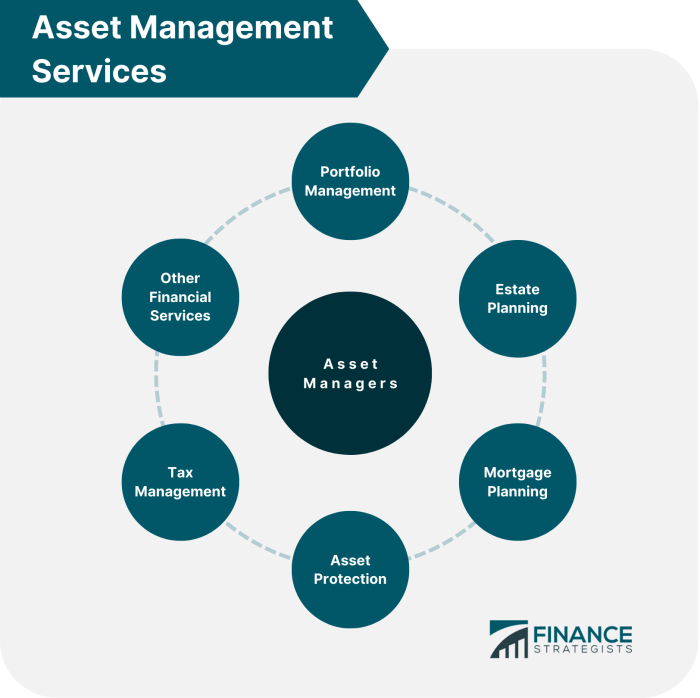
Delve into the intricate world of asset management with a focus on financial strategies that drive success, offering readers a compelling and insightful journey through the realm of managing assets effectively.
Explore the fundamental concepts and practical applications that underpin asset management practices, illuminating the key components essential for financial growth and stability.
How Asset Management Works
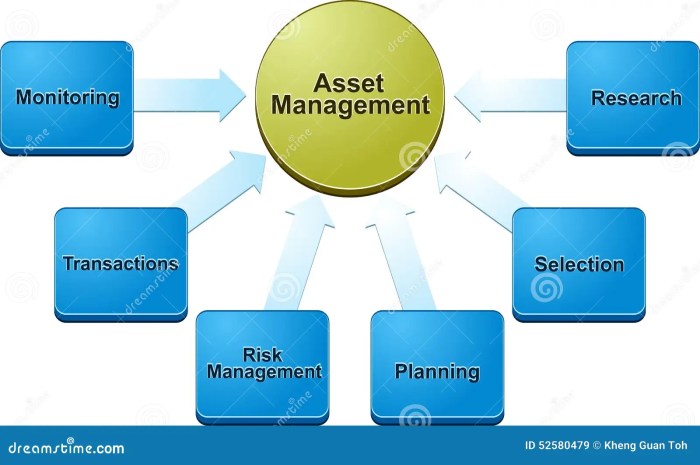
Asset management in financial terms involves the strategic management of a client’s investments to achieve specific financial goals. This includes the selection, monitoring, and maintenance of various assets to optimize returns while minimizing risks.
Examples of Assets Managed
- Stocks
- Bonds
- Mutual Funds
- Real Estate
- Commodities
Goals and Objectives
Asset management aims to preserve and grow the client’s wealth over time by balancing risk and return. The primary objectives include capital appreciation, income generation, risk mitigation, and diversification.
Key Processes Involved
- Asset Allocation: Determining the optimal mix of asset classes based on the client’s risk tolerance and investment goals.
- Portfolio Construction: Building a diversified portfolio of assets to spread risk and maximize returns.
- Risk Management: Monitoring market conditions and adjusting the portfolio to minimize potential losses.
- Performance Monitoring: Tracking the performance of assets over time and making necessary adjustments to meet objectives.
- Equities: Stocks offer high return potential but come with higher volatility and risk.
- Bonds: Fixed-income securities provide steady income with lower risk compared to stocks.
- Real Estate: Real estate investments offer diversification and potential for rental income and capital appreciation.
- Commodities: Investing in commodities like gold or oil can act as a hedge against inflation and currency devaluation.
- Age-based Allocation: Adjust your asset allocation based on your age, with younger investors focusing more on growth assets like stocks.
- Risk Tolerance: Consider your risk tolerance when allocating assets, with conservative investors favoring bonds and cash equivalents.
- Rebalancing: Regularly review and rebalance your portfolio to maintain the desired asset allocation mix and adapt to changing market conditions.
Asset Allocation
Asset allocation is a crucial component of any investment strategy as it involves spreading your investments across different asset classes to minimize risk and maximize returns. By diversifying your portfolio, you can reduce the impact of market fluctuations on your overall investment performance.
Comparison of Asset Classes
Strategies for Effective Asset Allocation
Role of Diversification
Diversification is a key principle in asset allocation that involves spreading investments across different asset classes, industries, and geographical regions to reduce risk. By diversifying, you can minimize the impact of a single investment’s poor performance on your overall portfolio. Remember, “Don’t put all your eggs in one basket.”
In conclusion, mastering the art of asset management is crucial for maximizing returns and achieving financial objectives, showcasing the significance of strategic planning and prudent decision-making in navigating the dynamic landscape of financial markets.
Essential Questionnaire
What are some examples of assets commonly managed?
Assets commonly managed include stocks, bonds, real estate, and commodities.
Why is asset allocation important in investment strategies?
Asset allocation helps in diversifying risk and maximizing returns by spreading investments across different asset classes.
How does diversification play a role in asset allocation?
Diversification involves spreading investments across various assets to reduce risk exposure and enhance portfolio stability.


