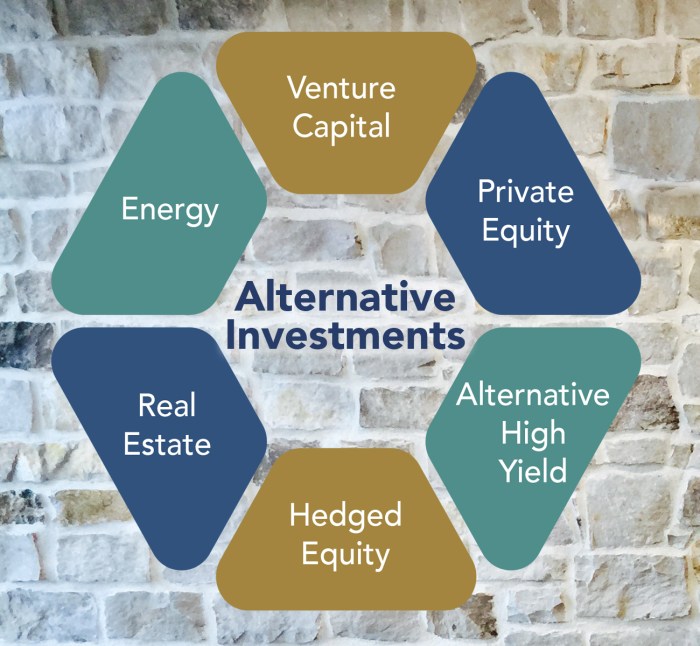
Beginning with Alternative investment asset management, the narrative unfolds in a compelling and distinctive manner, drawing readers into a story that promises to be both engaging and uniquely memorable.
As investors seek to diversify their portfolios and explore new avenues for growth, alternative investment asset management emerges as a key strategy to optimize returns and manage risks effectively.
Alternative Investment Asset Management
Alternative investments in asset management refer to non-traditional investment options beyond stocks, bonds, and cash. These assets often have low correlation to traditional markets, providing diversification benefits to a portfolio.
Examples of Alternative Investment Assets
- Real estate investment trusts (REITs)
- Private equity
- Hedge funds
- Commodities
- Venture capital
Benefits and Risks of Alternative Investments
Alternative investments can offer higher returns than traditional assets and provide a hedge against market volatility. However, they also come with higher fees, illiquidity, and lack of transparency, increasing the risk profile of a portfolio.
Role of Asset Managers
Asset managers play a crucial role in selecting, monitoring, and managing alternative investment portfolios for their clients. They conduct thorough due diligence, assess risk-return profiles, and ensure proper diversification to optimize the portfolio’s performance and manage associated risks.
Asset Management Strategies
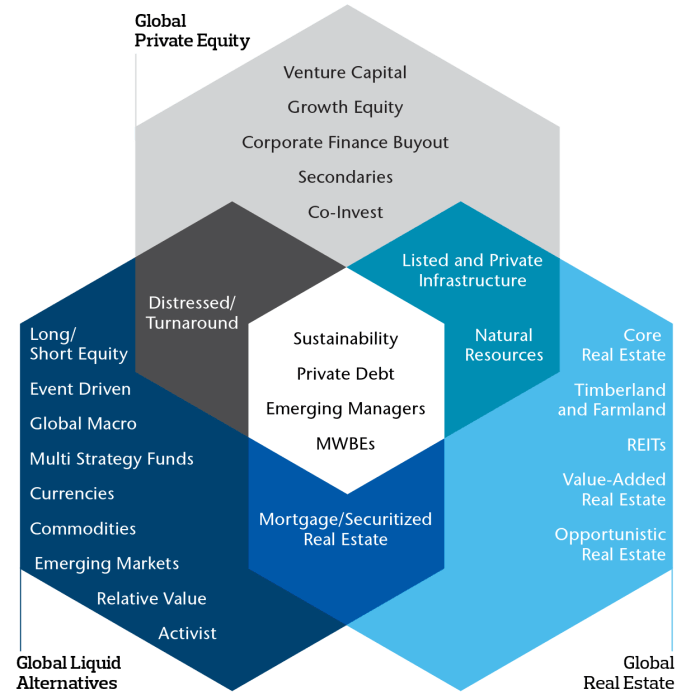
Asset management strategies play a crucial role in handling alternative investments effectively. These strategies help asset managers optimize returns while managing risks associated with these non-traditional assets.
Traditional vs. Alternative Asset Management Strategies
Traditional asset management primarily focuses on stocks, bonds, and cash equivalents. In contrast, alternative asset management involves investing in assets such as real estate, private equity, hedge funds, and commodities. While traditional asset management strategies are more straightforward and liquid, alternative asset management strategies often require specialized knowledge and long-term commitment.
Importance of Diversification in Alternative Asset Management
Diversification is key in alternative asset management as it helps spread risk across a variety of investments. By investing in different types of alternative assets, asset managers can reduce the impact of negative events on their overall portfolio. Diversification also provides the opportunity to capture returns from different market segments and economic conditions.
Risk Assessment and Mitigation in Alternative Investments
Asset managers assess and mitigate risks in alternative investments through thorough due diligence, research, and risk management techniques. They analyze factors such as liquidity, market volatility, and correlation with other assets to make informed investment decisions. Strategies like hedging, leverage management, and portfolio rebalancing are commonly used to mitigate risks in alternative investments.
Asset Allocation in Alternative Investments
Asset allocation plays a crucial role in managing alternative investment portfolios as it involves distributing investments across different asset classes to optimize returns while managing risk effectively.
Process of Asset Allocation for Alternative Investments
Asset allocation for alternative investments typically involves assessing the investor’s risk tolerance, investment objectives, and time horizon. Based on these factors, a suitable mix of alternative assets such as private equity, hedge funds, real estate, and commodities is determined. This process aims to create a diversified portfolio that can generate returns independent of traditional asset classes like stocks and bonds.
Examples of Asset Allocation Models for Alternative Investment Assets
- Endowment Model: This model, popularized by university endowments, allocates a significant portion of the portfolio to alternative assets like private equity, real estate, and natural resources to achieve long-term growth and diversification.
- Risk Parity Model: This model focuses on balancing risk across different asset classes by allocating investments based on their risk contribution rather than market capitalization. It aims to achieve more stable returns with lower volatility.
- Yale Model: Developed by Yale University’s endowment, this model emphasizes diversification across a wide range of alternative investments to enhance returns and mitigate risk.
Impact of Asset Allocation Decisions on Portfolio Performance and Risk Management
Asset allocation decisions have a significant impact on portfolio performance and risk management. A well-structured asset allocation strategy can help investors achieve their financial goals by maximizing returns while minimizing overall portfolio risk. By diversifying across various alternative assets, investors can reduce the correlation between their investments and enhance the resilience of their portfolios against market fluctuations.
In conclusion, alternative investment asset management offers a dynamic approach to portfolio diversification, risk management, and performance optimization in today’s evolving financial landscape. By leveraging various asset management strategies and carefully allocating resources, investors can unlock new opportunities and achieve their investment objectives with confidence.
FAQ Guide
What are alternative investments?
Alternative investments are non-traditional assets such as private equity, hedge funds, real estate, and commodities that provide diversification and potentially higher returns.
How do asset managers handle risks in alternative investments?
Asset managers assess risks in alternative investments by conducting thorough due diligence, implementing risk management strategies, and monitoring market conditions closely to make informed decisions.
Why is asset allocation important in alternative investment portfolios?
Asset allocation is crucial in managing alternative investment portfolios as it helps optimize returns, reduce overall risk, and ensure a well-balanced investment strategy tailored to individual goals and risk tolerance.


