Kicking off with Asset management firms for institutional investors, this opening paragraph is designed to captivate and engage the readers, providing a glimpse into the world of asset management firms and their crucial role in serving institutional investors. From renowned firms to specialized services, the discussion delves into the essential factors considered by institutional investors when choosing asset management firms.
Asset Management Firms for Institutional Investors

Asset management firms play a crucial role in serving institutional investors by offering a range of specialized services to help manage their assets effectively and achieve their financial goals. These firms are responsible for creating and implementing investment strategies, monitoring portfolio performance, conducting research, and providing expert advice to institutional clients.
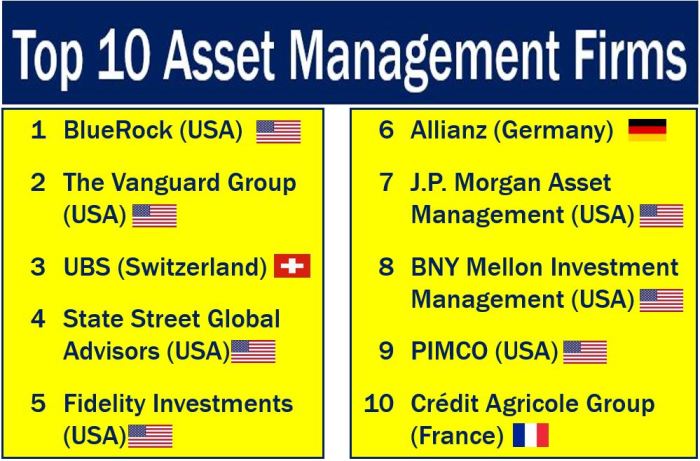
Examples of Well-Known Asset Management Firms Catering to Institutional Clients
- BlackRock
- Vanguard
- Fidelity Investments
- PIMCO (Pacific Investment Management Company)
Importance of Specialized Services Offered by Asset Management Firms for Institutional Investors
Asset management firms provide tailored solutions to meet the unique needs of institutional investors, such as pension funds, endowments, and insurance companies. These services include risk management, asset allocation, performance measurement, and regulatory compliance, among others. By leveraging their expertise and resources, asset management firms help institutional clients optimize their investment portfolios and achieve long-term financial success.
Key Factors Institutional Investors Consider When Selecting Asset Management Firms
- Track record and performance history of the firm
- Investment philosophy and approach
- Level of expertise and experience of the investment team
- Range of investment products and services offered
- Fee structure and cost-effectiveness
Asset Allocation
Asset allocation is a crucial component of investment strategy that involves distributing a portfolio’s assets among different asset classes. This strategy aims to optimize risk-adjusted returns based on the investor’s financial goals, risk tolerance, and time horizon.
Common Asset Classes for Institutional Investors
- Equities: Stocks representing ownership in a company.
- Fixed Income: Bonds issued by governments or corporations.
- Real Estate: Physical properties or real estate investment trusts (REITs).
- Alternative Investments: Hedge funds, private equity, commodities, etc.
Process of Asset Allocation
Asset allocation within institutional investment portfolios involves determining the target allocation to each asset class based on the investor’s investment objectives and risk profile. This process includes setting strategic asset allocation targets, periodic review and rebalancing, and adjusting allocations based on market conditions and economic outlook.
Comparison of Asset Allocation Strategies
- Pension Funds: Focus on long-term liabilities, often allocate more to fixed income for stability.
- Endowments: Seek to achieve growth and stability, often allocate to alternative investments for diversification.
- Insurance Companies: Balance growth and liquidity, typically allocate to bonds and equities.
In conclusion, asset management firms play a vital role in the financial landscape for institutional investors. Understanding the significance of asset allocation and the strategies employed by different types of investors is key to making informed decisions. As the industry continues to evolve, staying informed about the services and offerings of asset management firms is crucial for success in the investment world.
Top FAQs
What sets asset management firms apart when serving institutional investors?
Asset management firms provide specialized services tailored to the unique needs of institutional clients, offering expertise and solutions that cater to larger investment portfolios and specific requirements.
How do institutional investors approach asset allocation?
Institutional investors strategically allocate their funds across various asset classes to achieve diversification and optimize returns, considering factors such as risk tolerance and investment objectives.
What are some examples of well-known asset management firms that focus on institutional clients?
Examples include BlackRock, Vanguard, and State Street, which are renowned for their expertise in managing assets for institutional investors and offering a range of investment solutions.


