
With Balanced asset allocation strategy at the forefront, this paragraph opens a window to an amazing start and intrigue, inviting readers to embark on a storytelling journey filled with unexpected twists and insights.
Balanced asset allocation strategy involves diversifying investments across various asset classes to achieve optimal returns while managing risks effectively. This proven approach is essential for investors looking to build a stable and profitable portfolio.
Balanced Asset Allocation Strategy
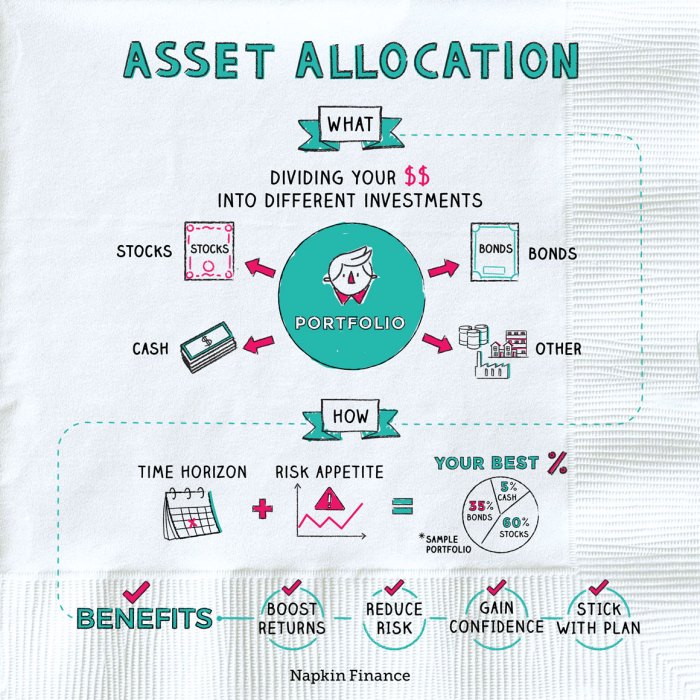
When it comes to investing, a balanced asset allocation strategy involves spreading your investments across different asset classes to manage risk and optimize returns. This approach aims to create a diversified portfolio that can withstand market fluctuations and volatility.
Examples of Asset Classes
- Stocks: Investing in shares of companies, which offer potential growth but come with higher risk.
- Bonds: Fixed-income securities issued by governments or corporations, providing steady income with lower risk compared to stocks.
- Real Estate: Investing in properties or real estate investment trusts (REITs) for potential income and appreciation.
- Commodities: Investing in physical goods like gold, silver, oil, or agricultural products to hedge against inflation.
Benefits of Balanced Asset Allocation
A balanced asset allocation strategy offers several benefits for long-term investment goals:
- Diversification: By spreading investments across different asset classes, you reduce the risk of significant losses from a single market downturn.
- Risk Management: Balancing high-risk assets like stocks with lower-risk assets like bonds helps manage volatility and potential losses.
- Potential for Growth: Exposure to different asset classes allows you to benefit from various market conditions and opportunities for growth.
- Stability: A well-diversified portfolio can provide more stable returns over time, helping you achieve your long-term financial objectives.
Importance of Asset Management
Asset management is a crucial component of financial planning that involves overseeing a client’s investments to achieve specific financial goals. It plays a vital role in optimizing portfolio performance, mitigating risks, and maximizing returns.
Optimizing Portfolio Performance
Asset management is essential for optimizing portfolio performance by strategically allocating investments across different asset classes. By diversifying the portfolio with a mix of equities, bonds, real estate, and other assets, asset managers aim to achieve a balance between risk and return. They continuously monitor market trends, economic conditions, and individual asset performance to make informed decisions that enhance the overall performance of the portfolio.
Mitigating Risks and Maximizing Returns
Asset management helps in mitigating risks by spreading investments across various asset classes, industries, and geographical regions. By diversifying the portfolio, asset managers reduce the impact of market volatility on overall returns. Additionally, asset managers conduct thorough research and analysis to identify opportunities that have the potential to generate higher returns while managing risks effectively. This proactive approach to risk management allows investors to achieve their financial goals while safeguarding their investments against unforeseen market fluctuations.
Types of Asset Allocation
When it comes to asset allocation, there are different strategies that investors can utilize to achieve their financial goals. The three main types of asset allocation strategies are strategic, tactical, and dynamic. Each strategy has its own characteristics and suitability based on the investor’s objectives.
Strategic Asset Allocation
Strategic asset allocation involves setting a long-term target mix of assets based on the investor’s risk tolerance, time horizon, and financial goals. This strategy aims to maintain a consistent allocation over time, periodically rebalancing to stay in line with the target mix.
Tactical Asset Allocation
Tactical asset allocation involves making short to medium-term adjustments to the portfolio based on market conditions or economic outlook. This strategy allows investors to take advantage of short-term opportunities or mitigate risks in the market.
Dynamic Asset Allocation
Dynamic asset allocation is a more flexible approach that allows for frequent adjustments based on changing market conditions. This strategy requires active management and may involve shifting assets between different classes more frequently than strategic or tactical allocation.
Factors Influencing Asset Allocation
When it comes to making asset allocation decisions, several factors come into play that can significantly impact the outcome. These factors include risk tolerance, time horizon, financial goals, economic conditions, market trends, and the ability to adjust based on changing circumstances.
Risk Tolerance
Risk tolerance refers to an individual’s or investor’s ability to handle fluctuations in the value of their investments. Those with a higher risk tolerance may be more willing to invest in volatile assets such as stocks, while those with a lower risk tolerance may prefer more stable investments like bonds. It’s essential to consider your risk tolerance when determining your asset allocation strategy to ensure it aligns with your comfort level.
Time Horizon
The time horizon, or the length of time an investor plans to hold their investments, is another critical factor in asset allocation decisions. Investors with a longer time horizon may be able to take on more risk in their portfolio, as they have more time to recover from any market downturns. On the other hand, investors with a shorter time horizon may opt for a more conservative approach to protect their capital.
Financial Goals
Financial goals play a significant role in determining the appropriate asset allocation strategy. Whether your goal is long-term growth, capital preservation, income generation, or a combination of these objectives, your asset allocation should be tailored to help you achieve your specific financial goals. It’s essential to align your investments with your financial objectives to ensure you stay on track to meet them.
Economic Conditions and Market Trends
Economic conditions and market trends can have a significant impact on asset allocation choices. During periods of economic growth, investors may lean towards riskier assets to capitalize on market opportunities. Conversely, during times of economic uncertainty or recession, investors may shift towards more defensive assets to protect their portfolios. Monitoring economic conditions and market trends can help investors make informed decisions about their asset allocation.
Adjusting Asset Allocation
It’s crucial to regularly review and adjust your asset allocation based on changing circumstances. As your risk tolerance, time horizon, and financial goals evolve, your asset allocation strategy may need to be rebalanced to ensure it remains aligned with your objectives. By staying proactive and adjusting your asset allocation when necessary, you can optimize your portfolio for long-term success.
In conclusion, adopting a balanced asset allocation strategy is crucial for investors aiming for sustainable growth and financial stability. By carefully diversifying across different asset classes and adjusting based on changing circumstances, individuals can work towards achieving their long-term investment objectives successfully.
FAQ Insights
What are the key benefits of a balanced asset allocation strategy?
A balanced asset allocation strategy helps in spreading risks, enhancing returns, and maintaining a stable investment portfolio over the long term.
How do economic conditions influence asset allocation decisions?
Economic conditions impact asset allocation by determining the performance of different asset classes, making it essential to adjust allocations accordingly.
What role does risk tolerance play in asset allocation?
Risk tolerance influences asset allocation decisions by guiding individuals on how much risk they are willing to take for potential returns.


